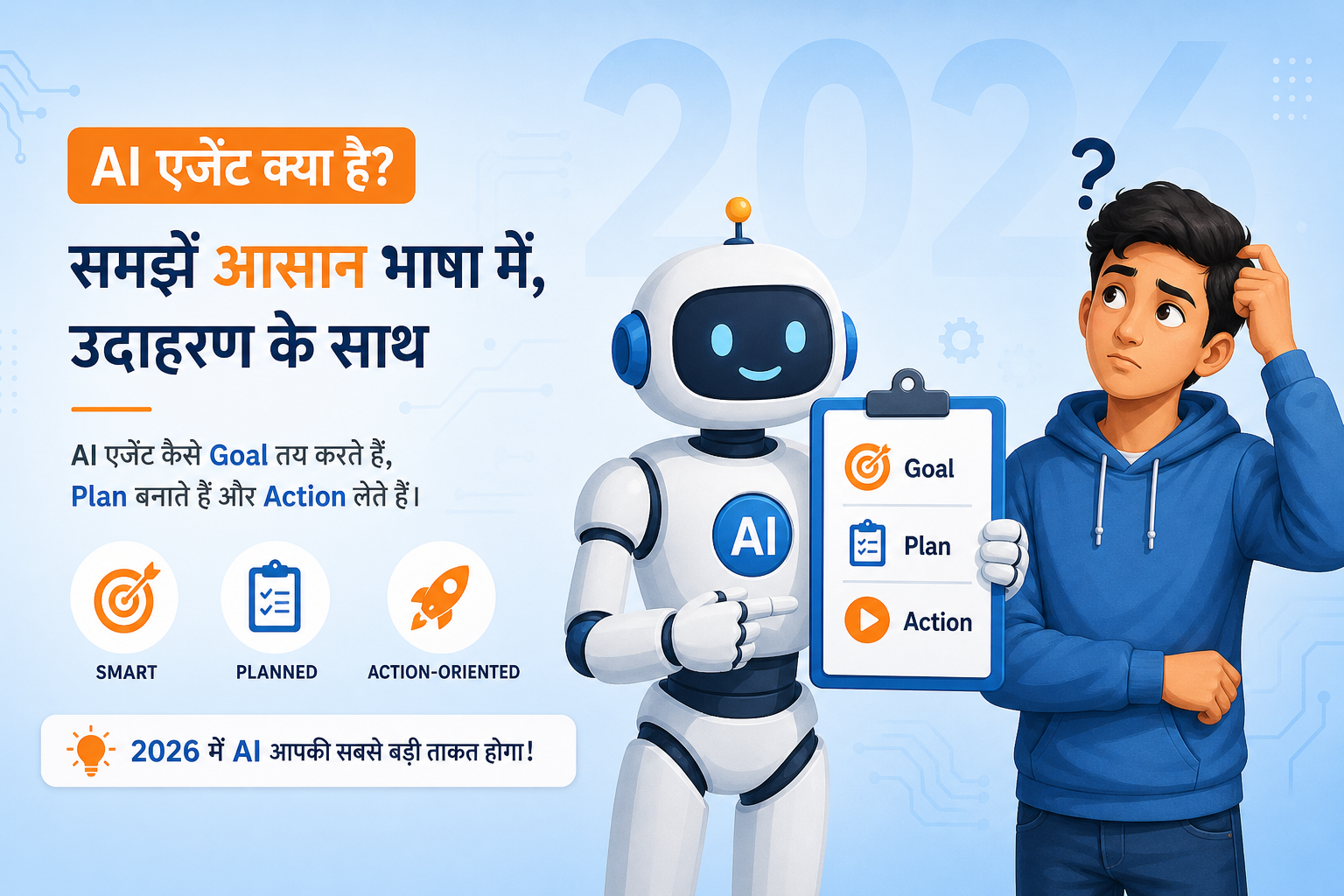
Aajkal har taraf Agentic AI ki baat ho rahi hai. Agar aap soch rahe ho ki Agentic AI Kya Hai aur kyun 2026 mein yeh itna famous ho gaya, to yeh article aapke liye hai — simple Hinglish mein, bina heavy jargon ke.
Key Takeaway
Agentic AI sirf jawab nahi deta — yeh khud plan bana kar kaam pura karta hai. 2026 mein yeh sabse tezi se badhta tech trend hai.
Contents
Agentic AI Kya Hota Hai?
Agentic AI kya hota hai? Seedhe shabdon mein: yeh aisi AI hai jo sirf baat nahi karti — yeh goal samajhti hai, plan banati hai, aur action le kar kaam complete karti hai.
Normal AI tools aapse sawal sunte hain aur jawab dete hain. Agentic AI usse aage jaati hai. Aap goal do, baaki steps woh handle karne ki koshish karti hai.
Example: aap bolte ho, “Mera trip plan kar do.” Sirf tips nahi — search, budget check, schedule, reminders — agent-style system yeh steps try karta hai.
Yeh concept AI agents, autonomous tools, aur multi-step workflows se juda hai. Agar aap pehle Cloud computing article padh chuke ho, to samajhna asaan hoga.
Agentic AI Kaise Kaam Karta Hai? (3-Step)
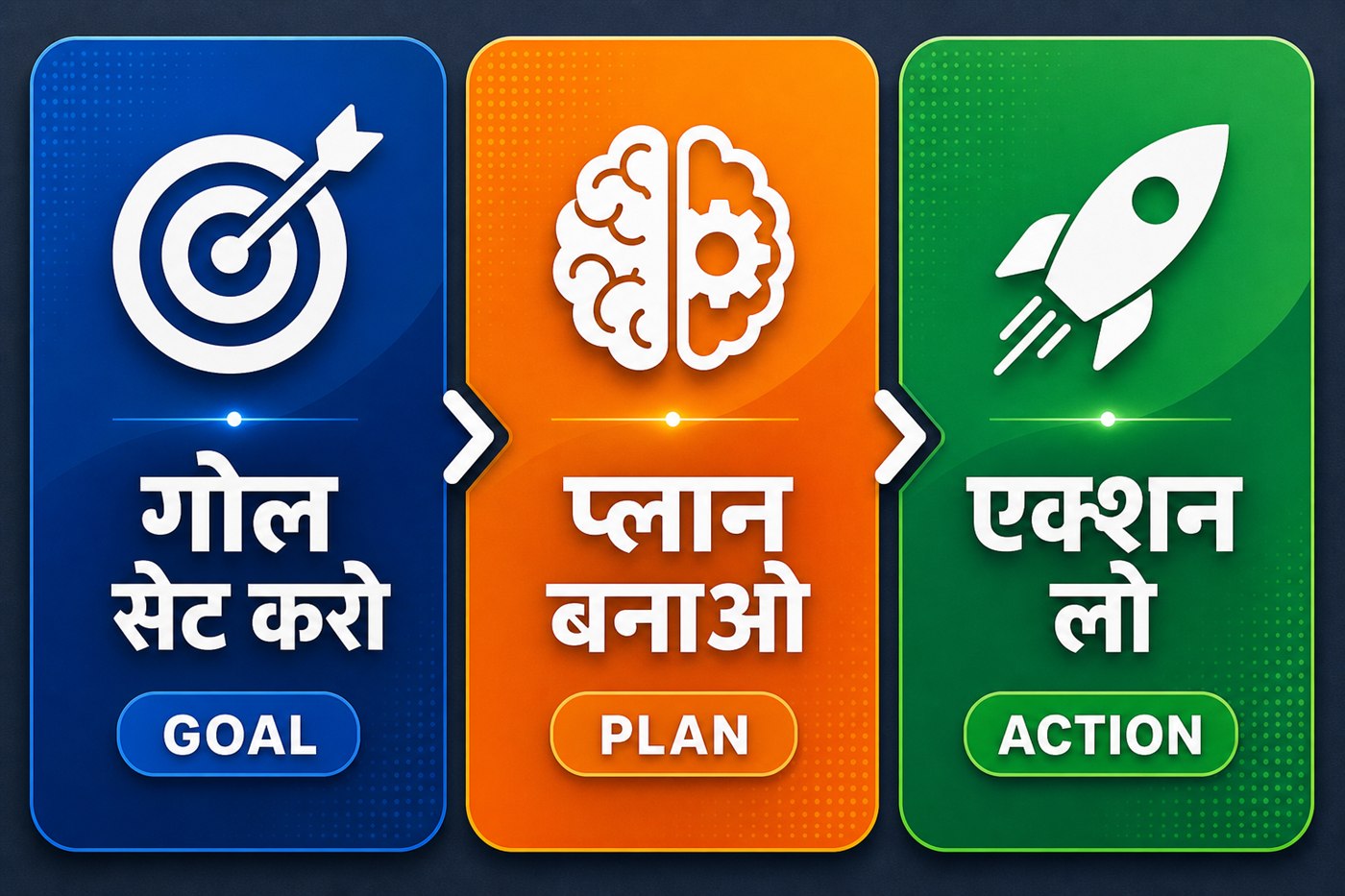
Agentic AI kaise kaam karta hai? Zyada tar systems teen simple steps follow karte hain.
Goal Set Karo
Clear goal do — jaise “Next week ke liye 5 Hindi blog ideas chahiye, beginners + SEO ke saath.” Agent audience, topic, keyword focus, aur output format break karta hai.
Plan Banao
AI plan banati hai: kaunsa tool, kaunsa data, kaunsa sequence. Yahan reasoning, memory, aur tools involve ho sakte hain. Advanced setups mein AI cognitive runtime guide madad karta hai.
Action Lo
Agent draft likhta hai, files banata hai, reminders set karta hai, ya approval mangta hai. Fail ho to retry/plan update — isliye yeh “digital worker” jaisa feel hota hai.
Yaad rakho: Goal → Plan → Action.
Agentic AI vs Chatbot
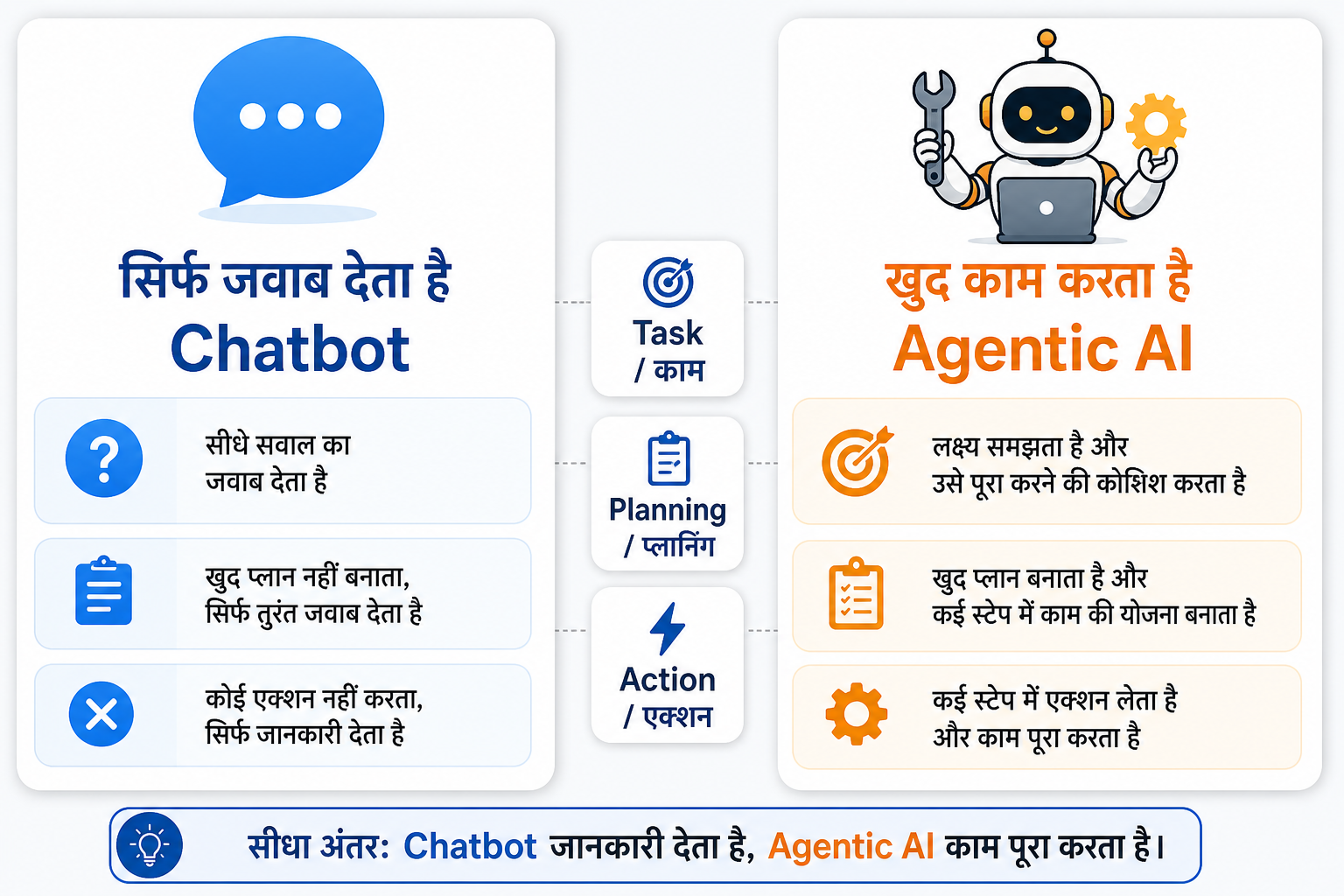
Bahut log confuse hote hain: agentic ai vs chatbot mein asal farq kya hai? Chatbot mainly jawab deta hai. Agentic AI kaam aage badhati hai.
| Feature | Chatbot | Agentic AI |
|---|---|---|
| Main kaam | Sawal ka jawab dena | Goal complete karna |
| Planning | Almost nahi / limited | Multi-step plan banata hai |
| Action | Mostly text suggestion | Tools use karke action le sakta hai |
| Memory / Context | Short conversation | Longer task context |
| Example | “Trip tips batao” | “Trip plan + checklist + reminders” |
| Best for | Quick Q&A, learning | Workflows, automation |
“Email kaise likhein?” — tips dega.
Draft + tone + reminder — execution support karega.
Matlab chatbot aapka “guide” hai. Agentic AI “junior teammate” banne ki koshish karta hai — final control phir bhi aapka hi rehta hai.
2026 Ka Sabse Bada Tech Trend Kyon Hai?
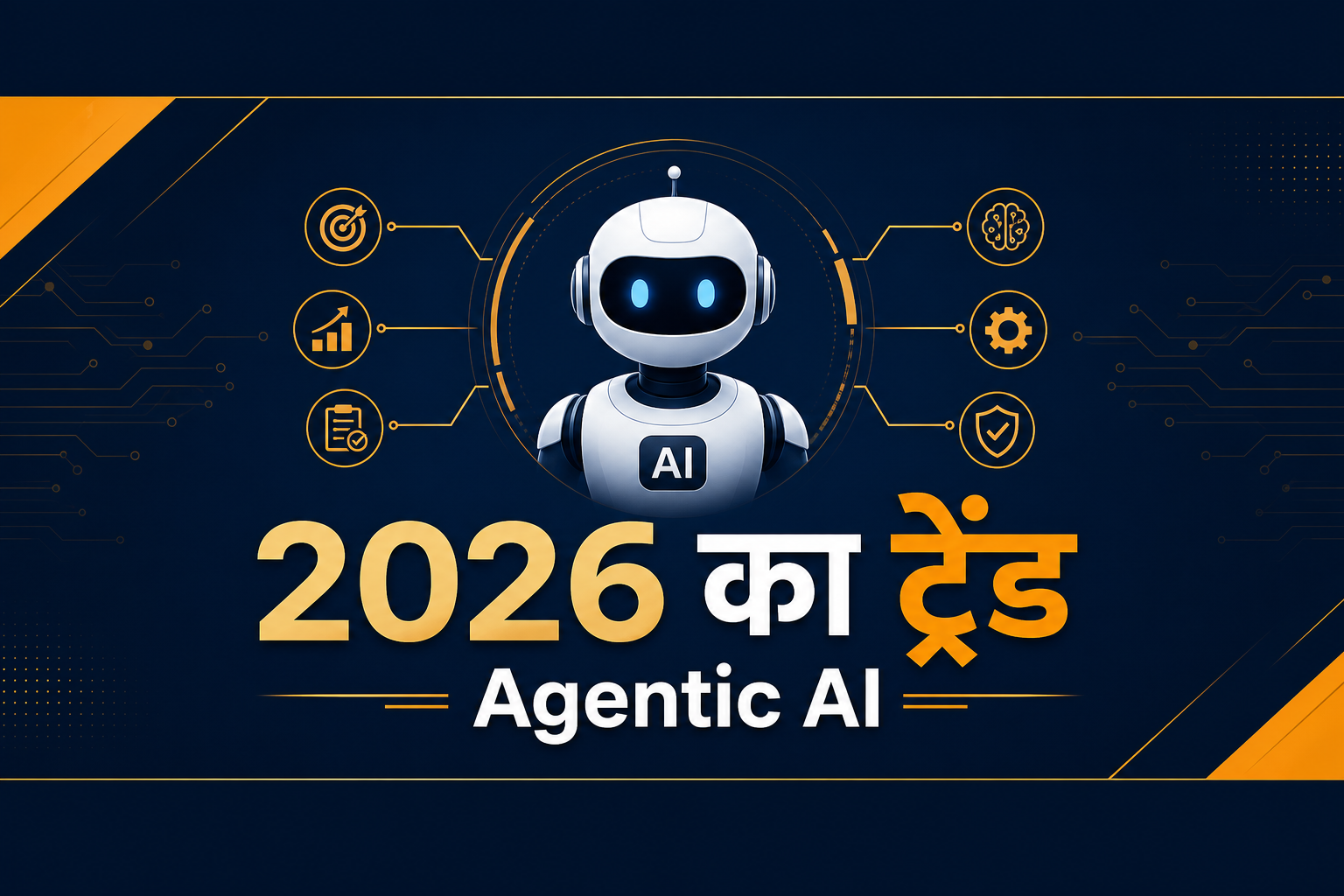
Kyun log kehte hain ki yeh 2026 ka sabse bada tech trend hai? 2023–2025 mein focus content generation pe tha. 2026 mein shift hai: “AI mere liye kaam bhi kare.”
Time bachta hai
Research, drafting, organizing jaise repetitive tasks fast ho sakte hain.
Tools connect
Email, docs, calendars ke saath agents integrate ho rahe hain.
Businesses automate
Support, ops, marketing workflows mein agent-style systems aa rahe hain.
USA mein Hindi diaspora ke liye bhi yeh relevant hai — remote work, side hustles, blogging, freelancing. Lekin hype aur reality alag ho sakti hai. Supervision zaroori hai.
Real Life Examples (Beginners Ke Liye)
Theory kam, examples zyada. Yeh scenarios beginners easily relate kar sakte hain.
1) Student / Exam Prep
Goal: Python basics reviseAgent plan, daily checklist, weak topics, aur practice questions suggest karta hai.
2) Hindi Blogger
Goal: SEO-friendly draftOutline, keywords, FAQ, meta description suggest karta hai. Aap apni voice add karte ho.
3) Job Seeker (USA / Remote)
Goal: Tailored resume bulletsJob description padhta hai, skills highlight karta hai, cover letter draft karta hai.
4) Small Business / Side Hustle
Goal: Social posts scheduleContent ideas, captions, hashtags, posting calendar — approval ke baad publish.
Pattern simple hai: aap direction dete ho, agent execution support karta hai.
Kya Yeh Job Replace Karega?
Seedha jawab: poori tarah se nahi — kam se kam beginners ke current level pe nahi.
Agentic AI repetitive roles pe pressure de sakti hai. Lekin judgment, trust, creativity, aur accountability abhi bhi humans ke paas hai.
Jo log aage rahenge, woh AI ko enemy nahi, tool maanenge:
Blogging, tech learning, ya freelancing mein agentic tools productivity booster ban sakte hain — replacement nahi, multiplier.
FAQ
Agentic AI aur Generative AI mein kya farq hai?
Generative AI mainly naya content banati hai — text, image, code, audio. Agentic AI us content aur tools ko use karke multi-step goal complete karne ki koshish karti hai. Bahut systems dono ko mix karte hain.
Kya Agentic AI free mein use kar sakte hain?
Haan, kai platforms free/freemium dete hain. Advanced agents aur high limits usually paid hote hain. Free tier se practice karo. Sensitive data casually share mat karo.
Agentic AI seekhne ke liye kya zaroori hai?
Coding shuru mein zaroori nahi. Clear goals, basic AI terms, output verification, aur chhote projects pe practice. Cloud/AI basics (Cloud computing article) aur AI runtime concepts (AI cognitive runtime guide) aage madad karenge.
Conclusion
Agentic AI Kya Hai? Yeh AI ka next practical layer hai jo sirf jawab nahi deta — goal samajhta hai, plan banata hai, aur action leta hai.
2026 mein yeh trend isliye bana kyunki log AI se sirf content nahi, real work expect kar rahe hain. Concept samjho, chhote use-cases try karo, har output check karo — phir complex workflows pe jao.
TheHindiBlogs par tech simple Hindi mein seekho — Agentic AI aapka next practical skill topic hai.